

CRO

CONVERSION RATE OPTIMIZATION

Most websites already have enough traffic. The real issue is that the website doesn’t convert well enough.
At Markaitek, we optimize your website and funnels to turn more visitors into inquiries, calls, and sales—without increasing your ad spend.

Turn your website into a growth engine

Trust us with your conversion optimization to maximize the performance of your pages and campaigns. We analyze user experience, data, and friction points to increase your conversion rate and revenue per visit.

UX UI

CRO audit & friction-point diagnosi

We identify what prevents your visitors from taking action: lack of clarity, distractions, forms that are too long, a poorly positioned offer, slow pages, confusing UX, and messaging that doesn’t match user intent.

Typical deliverables:
Friction map (page by page) Prioritized improvements (quick wins vs. higher-effort items) UX + copy + structure recommendations Testing plan and rollout plan

Audit CRO

UX & behaviour analysis (Clarity, heatmaps, journeys)

We use behavioural analytics tools and navigation data to understand where and why users drop off: scrolling, clicks, rage clicks, abandonment, and real journeys vs. the intended journey.

What we look for:
Sections that are ignored or misunderstood Elements that distract from the main goal Confusion points (messaging, proof, pricing, forms) Mismatches between traffic source and page content

AB Testing

Testing & experimentation (A/B testing + rapid iterations)

We don’t rely on opinions—we measure, test, and learn.
Based on your traffic and constraints, we implement the right experimentation approach: A/B tests, sequential testing, UX/copy iterations, or cohort-based optimization.

Approach:
Clear hypotheses Prioritization (impact vs. effort) Reliable measurement (events, conversions, tracking QA) Continuous iteration based on results
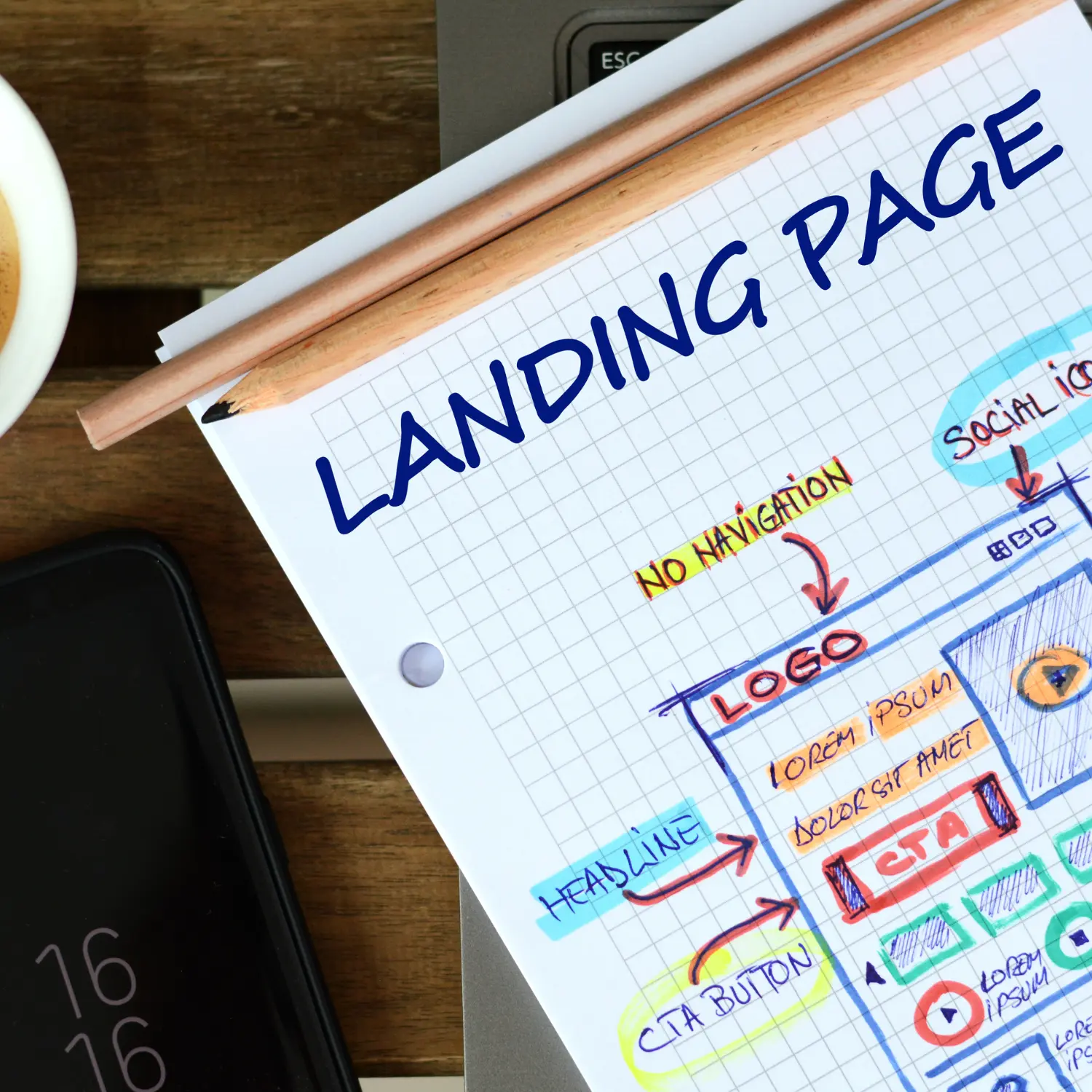
Landinbg page analysis

Optimization of key pages (landing pages, forms, funnels)

Optimization of key pages (landing pages, forms, funnels) We rework your pages to improve conversion: messaging, structure, proof points, CTAs, friction, speed, mobile-first UX, and trust. The goal: get more people to the next step.
Examples of optimizations:
Google Ads / Meta / LinkedIn landing pages Conversion-focused SEO/GEO service pages
Forms (less friction + better qualification)
“Contact” and “Request a Quote” pages
Checkout / appointment booking

Analyse CRO

Reliable measurement & tracking (GA4, GTM, events, dashboards)

Effective CRO depends on solid measurement. We make sure your conversions, events, and sources are tracked properly (forms, calls, clicks, bookings) so you can make decisions based on data. What we implement:

Tracking plan (events + conversions) GA4 + Google Tag Manager setup
Marketing attribution (UTMs, campaigns)
Dashboards (conversion KPIs, CPL, CPA, page-level conversion rates)

Our CRO Approach in 8 steps

Here’s what you typically receive in a CRO engagement with Markaitek. Exact deliverables may vary depending on your website, traffic volume, and goals (leads, calls, sales, appointments).

1. Full CRO diagnosis
  • Review of key pages (landing pages, service pages, contact page, forms, checkout if applicable)
  • Identification of conversion friction (clarity, offer, trust, mobile UX, speed, distractions, form complexity)
  • Analysis of real user journeys (sources → pages → actions) and drop-offs
2. Prioritized backlog (impact vs. effort)
  • Action list ranked by priority (quick wins vs. larger initiatives)
  • Hypotheses attached to each item (what we’re improving, why, expected outcome)
  • Effort estimates and dependencies (development, content, tracking)
3. UX recommendations and page structure
  • Recommended page structure (sections to include, order, CTAs)
  • Mobile-first UX improvements (readability, navigation, friction reduction)
  • Trust elements (proof points, micro-copy, FAQs, reassurance)
4. Conversion copy improvements (messaging that converts)
  • Updates to headlines, sub-headlines, benefits, and CTAs
  • Offer clarity (who it’s for, expected result, timeline, next steps)
  • Form micro-copy to reduce abandonment
5. Measurement and tracking plan (data-driven decision making)
  • Event plan (CTA clicks, form submissions, calls, scroll, key steps)
  • Setup or audit of GA4 + Google Tag Manager + Clarity
  • Conversion attribution (UTMs, campaigns, pages, sources)
6. Testing and experimentation plan (when relevant)
  • Testing roadmap (A/B testing or sequential iterations depending on volume)
  • Definition of the primary KPI (CVR, CPL, CPA, revenue/visit, etc.)
  • Validation method (statistical significance / directional trend / comparable periods)
8. Performance dashboard (optional, recommended)
  • Recommended page structure (sections to include, order, CTAs)
  • Mobile-first UX improvements (readability, navigation, friction reduction)
  • Trust elements (proof points, micro-copy, FAQs, reassurance)
8. Deployment support (based on your delivery model)
  • Implementation-ready recommendations (dev brief + content)
  • Simple wireframes for key pages
  • Tracking QA (conversion validation after go-live)

FAQ CRO

Lorem ipsum dolor sit amet, consectetur adipiscing elit. Ut elit tellus, luctus nec ullamcorper mattis, pulvinar dapibus leo.

What is CRO, in practical terms?

CRO (Conversion Rate Optimization) is improving a website or funnel to generate more meaningful actions with the same traffic—requests, calls, appointments, or purchases.

Is it worth it if I don’t have much traffic?

Yes, but the approach changes. With lower traffic, we focus on:

  • UX/copy quick wins

  • stronger “money pages”

  • reliable tracking

    instead of heavy A/B testing.

Is A/B testing required?

No. When volume is too low, we use sequential iterations (before/after) and measure impact over comparable periods. A/B testing becomes relevant once you have enough conversions to draw solid conclusions.

How long before I see results?

Often, you’ll see early gains after the first fixes (forms, clarity, CTAs, speed). Bigger improvements come through the cycle: audit → deploy → measure → iterate.

Which pages usually deliver the best CRO ROI?

Typically:

  • acquisition landing pages (Google/Meta/LinkedIn)

  • service pages (SEO/GEO “money pages”)

  • contact / request-a-quote pages

  • conversion steps (booking flow, checkout)

What most commonly hurts conversion rates?
  • Unclear offer (it’s not obvious who it’s for and what you get)

  • Lack of trust (proof, reassurance, transparency)

  • Too much friction (long forms, unnecessary steps)

  • Message mismatch (ad promise doesn’t match the page)

  • Mobile issues (readability, speed, navigation)

Which KPIs should we track?

It depends on the goal, but commonly:

  • conversion rate (CVR) by page and source

  • cost per lead (CPL) / cost per acquisition (CPA)

  • form completion rate

  • call rate / lead quality

  • revenue per visit (for e-commerce)

Can you optimize if my tracking isn’t set up properly?

Yes—and it’s often step one. Without reliable events and conversions, you’re optimizing blind. We start by fixing measurement (GA4/GTM, attribution, call tracking).

Does CRO help SEO too?

Yes. A clearer, faster, more useful and engaging site often improves:

  • user experience (UX)

  • click-through rate (CTR)

  • overall page performance (which can support SEO outcomes)

Can you work with our developers or existing agency?

Yes. We can deliver implementation-ready recommendations, collaborate with your team, or manage integration depending on your setup.